
- Home
- Product application and solution
- Mechanical Locks vs Electronic Locks
Mechanical Locks vs Electronic Locks
Mechanical Locks vs Electronic Locks
At some point, every buyer asks the same question: Should we go mechanical or electronic? Once that question comes up, you are no longer comparing locks—you are comparing operational risk, maintenance workload, and long-term responsibility.

Here's what most B2B procurement teams discover too late. The real difference between mechanical and electronic locks isn't obvious at installation—it surfaces years later when maintenance costs add up or systems fail. This article breaks down how each option performs in real-world use, based on what manufacturers consistently observe across industrial, commercial, and infrastructure projects.
What’s Actually Different Under the Hood
Mechanical locks and electronic locks both secure access — so what's the difference?
Simple: they operate on completely different principles. Knowing this before you buy prevents problems during installation and use.
| Comparison Dimension | Mechanical Locks | Electronic Locks |
|---|---|---|
| Core mechanism | Fully physical components such as cams, levers, discs, and combination wheels | Programmable access management via keypads or control boards |
| Power requirement | Power-free (no batteries) | Power-dependent (typically battery-powered) |
| System dependencies | No electronic circuits and no firmware updates; low operational dependency | Adds operational dependencies (battery management, ownership, processes); higher dependency |
| Primary advantage | Simple, durable, and built for long service life | More control and access management capability |
| Common use cases | Industrial cabinets, outdoor enclosures, utility equipment | Shared environments and compliance-driven facilities where dynamic access control is important |
| Access control flexibility | Limited dynamic control; relies on physical access methods and/or a combination of disciplines | Can assign multiple users, set temporary codes, and manage permissions dynamically |
| Long-term performance (deployment context) | Often operates reliably for 10–15 years with minimal intervention | Can perform well, but stability typically improves only after a clear operational structure is in place |
| Typical maintenance focus | Basic servicing, such as lubrication during scheduled inspections | Maintenance workload is often tied to battery-related issues and adherence to replacement schedules |
| Common operational risk | Weak combination practices (obvious patterns, never rotating codes) reduce security | Without defined battery schedules and ownership, minor issues can accumulate quickly |
| Practical tip | Enforce combination rules: avoid obvious number patterns and rotate codes periodically | Define battery replacement schedules and ownership responsibilities to keep performance stable |
How These Differences Show Up in Daily Operations
Mechanical locks typically fail gradually through wear, often providing warning signs before failure. Electronic locks, by contrast, tend to fail discretely—a depleted battery, configuration error, or environmental interference can stop access instantly.
Electromagnetic interference is a common example. When electronic locks are installed near heavy motors or high-current equipment, unshielded electronics may misread inputs. This is not a design flaw, but a deployment consideration that must be addressed during specification.
Security, Maintenance, and Hidden Costs
Security performance and operating cost are closely linked. Decisions made during specification often determine long-term workload and total cost of ownership.
Security Risks: Guessable Codes vs Digital Exposure
Mechanical locks are rarely compromised by force. Instead, risk most often comes from user behavior. Although a four-digit combination offers 10,000 possible codes, studies suggest that 30–40% of users choose predictable combinations. In shared environments, repeated use can also create detectable wear patterns.
Electronic locks face different exposure. While dramatic hacking scenarios are rare, risks may come from firmware configuration, unsecured protocols, or EMI. In one factory installation, keypad failures occurred near high-power machinery, and additional shielding resolved the issue without replacing the locks.
Hidden Maintenance Costs Buyers Often Overlook
Initial pricing rarely reflects long-term effort. Over five years, electronic locks typically incur USD 20–40 per unit in battery and handling costs, assuming planned replacement rather than emergency intervention.
Mechanical locks follow a slower maintenance curve. Lubrication and inspection usually total USD 5–10 per unit over the same period. One European distribution center reported that battery servicing alone consumed more technician hours than all mechanical lock maintenance combined.
Tip for buyers: always calculate maintenance in labor hours, not just parts. Labor frequently represents the highest hidden cost.
What Happens When You Scale from 10 Locks to 500
At a small scale, maintenance differences feel manageable. At a large scale, they compound quickly. Battery replacement across hundreds of electronic locks requires scheduling, access coordination, documentation, and testing.
Facility management research suggests that labor accounts for up to 60% of total access-control lifecycle cost. This explains why many organizations deploy hybrid systems—electronic locks where control is critical, and mechanical solutions where stability is most important.
How B2B Buyers Choose the Right Solution
The best choice is rarely about technology leadership. It is about operational fit.
Match Lock Type to Environment and Usage
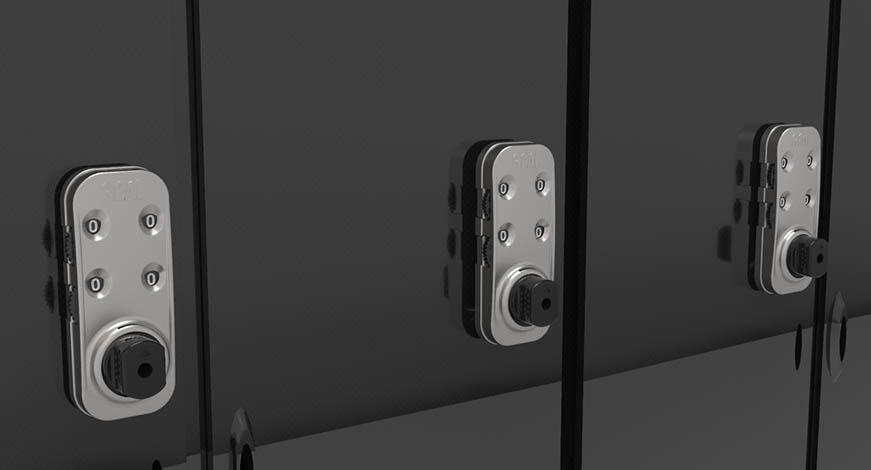
High-traffic offices, shared laboratories, and regulated areas benefit from electronic access control. Outdoor cabinets, remote installations, and industrial equipment often perform better with mechanical designs, including robust keyless combination lock solutions.
Look Beyond Features: Compliance and Supplier Capability
Locks are long-term infrastructure components. Certification support, documentation, OEM capability, and supply stability often matter more than feature lists. Manufacturers with in-house testing and clear compliance pathways typically deliver more predictable results.
Ask the Questions That Reveal Long-Term Fit
Before placing bulk orders, buyers should clarify ownership of maintenance, failure response procedures, and change management. Asking suppliers to outline a five-year ownership scenario often reveals whether a solution truly fits operational realities.
Frequently Asked Questions
Are mechanical locks more secure than electronic locks?
Security depends on design quality, application, and usage conditions, not simply whether a lock is mechanical or electronic.
How often do electronic lock batteries need replacement?
Most electronic locks require battery replacement every 12–24 months, depending on usage frequency and environment.
Which option has a lower long-term cost?
Mechanical locks generally have lower maintenance costs, while electronic locks offer greater flexibility and access control.
Conclusion: Most organizations do not choose one technology forever. They choose what works best for each situation. When buyers evaluate locks through an operational lens rather than a feature checklist, selecting the right keyless combination lock becomes a strategic decision instead of a debate—and that conversation naturally leads to the next step in system planning.
Contact REAL LOCKS today to discuss bulk orders, OEM programs, and custom keying solutions—keyed alike, keyed different, and master key systems.